
Japan's No. 1 Kaomoji Looks Teary, but It's Not Just for Sad Moments
October 10 Is Kaomoji Communication Day
Last year, Simeji established October 10 as Kaomoji Communication Day, a day to share feelings through kaomoji. This year is its second year. To mark the occasion, the app released the ranking a day earlier, on October 9. Kaomoji combine letters and symbols to create expressions, like '^_^'. Kaomoji is the Japanese word for these text faces.
The announcement was based on two sources. One was actual typing records from 16 countries, including Japan, from January 1 to September 30, 2026. The other was a survey of Simeji users in Japan, held from September 10 to 30. The survey collected 3,533 valid responses.
One Ribbon Made the Rankings in All 15 Countries
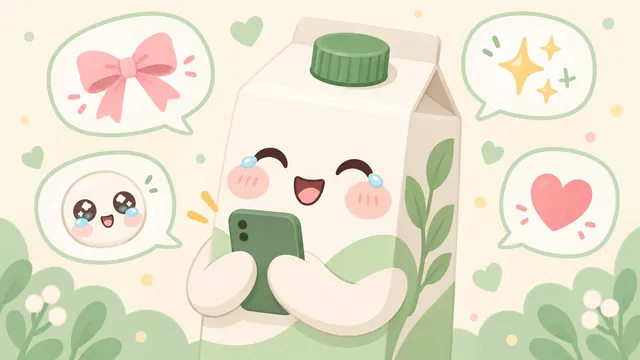
The ribbon-shaped symbol '⋆. 𐙚 ˚' really stands out in the country rankings. It made the top 5 in all 15 countries outside Japan. In 11 countries, including the UK, France and Indonesia, it was No. 1. That means this decoration at the end of a sentence was used more often than any facial expression in those 11 countries.
In the US, Germany and Russia, the smiling face '˃͈◡˂͈' took No. 1. So the top spots were split between faces and text decorations, depending on the country.
Japan's No. 1 Is a Face With Tears Welling Up
Looking at Japan on its own, things are different. Its No. 1 kaomoji is a face with tears welling up in its eyes. Simeji also split Japan's records into people aged 19 and under and those aged 20 and over. The same kaomoji made the top 3 in both age groups.
For people aged 19 and under, that teary face was No. 1. For those aged 20 and over, No. 1 was a downcast face with an ω-shaped mouth. That downcast face made the top 2 in both age groups.
The differences showed up at No. 4 and No. 5. For people aged 19 and under, No. 4 was a face with a ribbon, and No. 5 was the sparkle symbol '˖ ࣪⊹'. For those aged 20 and over, No. 4 was the bowing face 'm(_ _)m', and No. 5 was the smiling face '(^^)'. Among those aged 19 and under, faces with added decorations and symbols used on their own to set a mood also made the ranking.
The Teary Face Is Used Most When People Feel Moved
The survey also asked when people use this face with tears welling up. The most common answer was when they feel moved, followed by when they want to express thanks. Both answers were more common than when they feel sad.
One respondent in their early teens said they use it because their eyes well up when they feel grateful. A bit like tacking a teary emoji onto a thank-you.
The reasons for using kaomoji also varied by age. Overall, 'because they're cute' came 1st, followed by 'they make it easy to express my feelings' and 'I want to soften the sentence'. Among teens, 'because they're cute' was the most common answer. Among people in their 20s and older, 'they make it easy to express my feelings' came out on top.
The Arms-Up Celebration Face Is No. 1 for Old-School Vibes
The survey also asked people to pick kaomoji that feel a little old-school. The arms-up celebration face '\(^o^)/' came 1st, '^_^' came 2nd, and '(^^)' came 3rd. But feeling old-school doesn't mean they've disappeared. 'm(_ _)m' ranked 4th for nostalgia and also 4th in usage among people aged 20 and over.
What you add to the end of a message also ties into your reply habits. DoYouBox's 'My Texting Style Test' uses 8 questions to tell you whether you're an instant replier or a ghoster. If you're curious whether your heart reacts first when something moves you, try 'Are You a T? (T vs F)' too.
Cast your vote
When you send a thank-you message, what do you do?
Pick one to see what everyone else chose